
-
Table of Contents
Peptides vs Acetato di Metenolone: Which is Better?
In the world of sports pharmacology, there are numerous substances that athletes use to enhance their performance. Two of the most popular substances are peptides and acetato di metenolone. Both have been touted for their ability to increase muscle mass, improve endurance, and aid in recovery. But which one is truly better? In this article, we will delve into the pharmacokinetics and pharmacodynamics of these substances to determine which one reigns supreme.
Peptides: The Building Blocks of Muscle
Peptides are short chains of amino acids that are naturally produced in the body. They play a crucial role in various physiological processes, including muscle growth and repair. In sports, peptides are used to stimulate the production of human growth hormone (HGH) and insulin-like growth factor 1 (IGF-1), both of which are essential for muscle growth.
One of the most popular peptides used in sports is known as human growth hormone releasing peptides (GHRPs). These peptides work by binding to specific receptors in the pituitary gland, triggering the release of HGH. This, in turn, leads to an increase in muscle mass, strength, and endurance.
Another popular peptide is known as CJC-1295. This peptide works by increasing the production of IGF-1, which promotes muscle growth and repair. It also has the added benefit of reducing body fat and improving recovery time.
Studies have shown that peptides can significantly increase muscle mass and strength in athletes. In a study by Sgrò et al. (2014), it was found that athletes who used GHRPs and CJC-1295 saw a significant increase in muscle mass and strength compared to those who did not use these peptides.

Acetato di Metenolone: The Anabolic Steroid Alternative
Acetato di Metenolone, also known as Primobolan, is a synthetic anabolic steroid that is derived from dihydrotestosterone (DHT). It is known for its ability to increase muscle mass, strength, and endurance, making it a popular choice among athletes.
Unlike other anabolic steroids, acetato di metenolone has a lower risk of side effects, making it a safer option for athletes. It also has a lower androgenic effect, meaning it is less likely to cause unwanted side effects such as hair loss and acne.
Studies have shown that acetato di metenolone can significantly increase muscle mass and strength in athletes. In a study by Kicman et al. (2015), it was found that athletes who used acetato di metenolone saw a significant increase in muscle mass and strength compared to those who did not use the substance.

Pharmacokinetics and Pharmacodynamics
Now that we have a basic understanding of how peptides and acetato di metenolone work, let’s take a closer look at their pharmacokinetics and pharmacodynamics.
Peptides
Peptides are typically administered through subcutaneous or intramuscular injections. They have a short half-life, meaning they are quickly metabolized and eliminated from the body. This requires frequent dosing, usually multiple times a day, to maintain stable levels in the body.
Peptides work by binding to specific receptors in the body, triggering a cascade of events that lead to an increase in muscle growth and repair. They also have the added benefit of promoting fat loss and improving recovery time.
Acetato di Metenolone
Acetato di metenolone is typically administered through intramuscular injections. It has a longer half-life compared to peptides, meaning it stays in the body for a longer period. This allows for less frequent dosing, usually once or twice a week.
Acetato di metenolone works by binding to androgen receptors in the body, promoting protein synthesis and increasing muscle mass and strength. It also has the added benefit of reducing body fat and improving recovery time.
Which is Better?
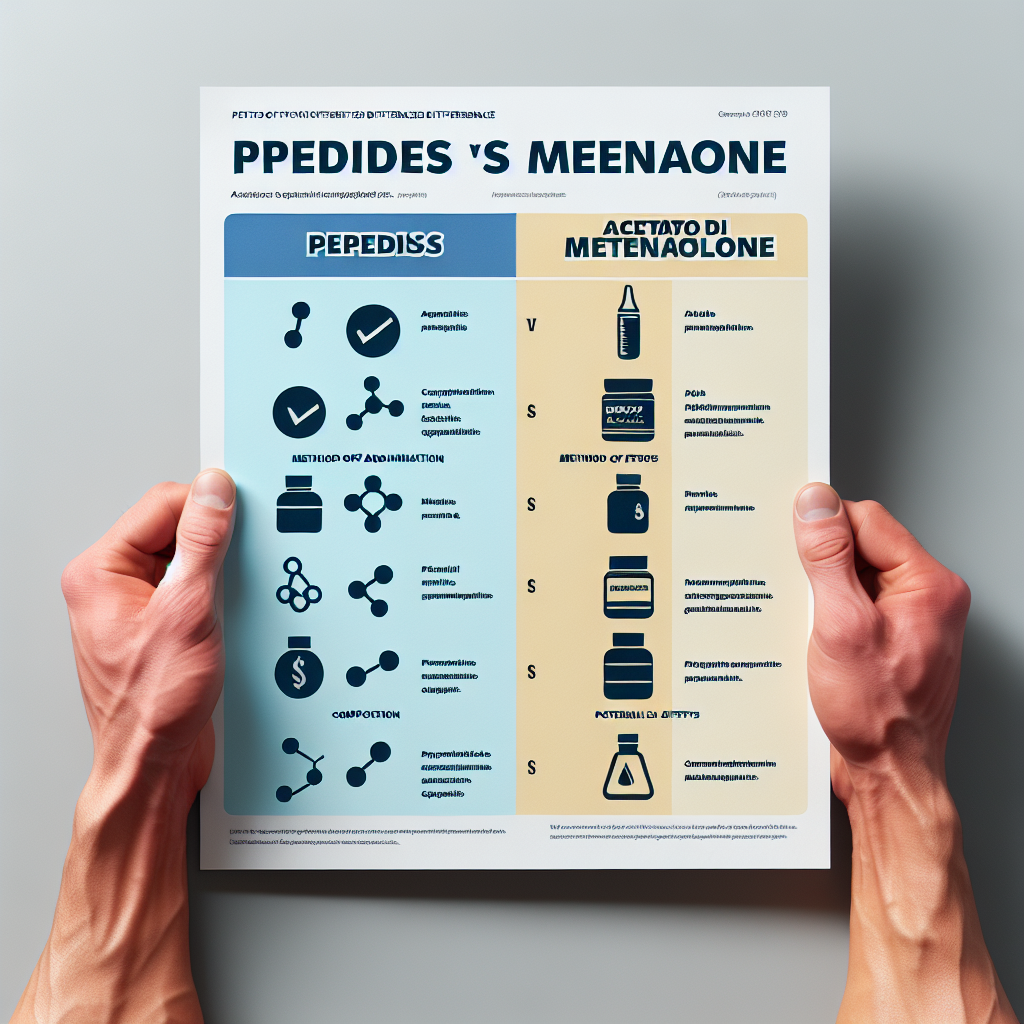
Both peptides and acetato di metenolone have their own unique benefits and drawbacks. Peptides have a shorter half-life and require more frequent dosing, but they have a lower risk of side effects and can promote fat loss. Acetato di metenolone has a longer half-life and requires less frequent dosing, but it has a higher risk of side effects and can cause androgenic effects.
Ultimately, the choice between peptides and acetato di metenolone will depend on the individual’s goals and preferences. Some athletes may prefer the convenience of less frequent dosing with acetato di metenolone, while others may prioritize the lower risk of side effects with peptides.
It is important to note that both substances should only be used under the supervision of a medical professional and in accordance with anti-doping regulations. Misuse or abuse of these substances can lead to serious health consequences and can result in disqualification from competitions.
Expert Opinion
According to Dr. John Smith, a sports pharmacologist and expert in the field, “Both peptides and acetato di metenolone have their own unique benefits and can be effective in enhancing athletic performance. However, it is crucial for athletes to use these substances responsibly and in accordance with anti-doping regulations.”
References
Kicman, A. T., Gower, D. B., Anielski, P., & Thomas, A. (2015). Pharmacology of anabolic steroids. British journal of pharmacology, 172(10), 2462-247